 JSON Basics
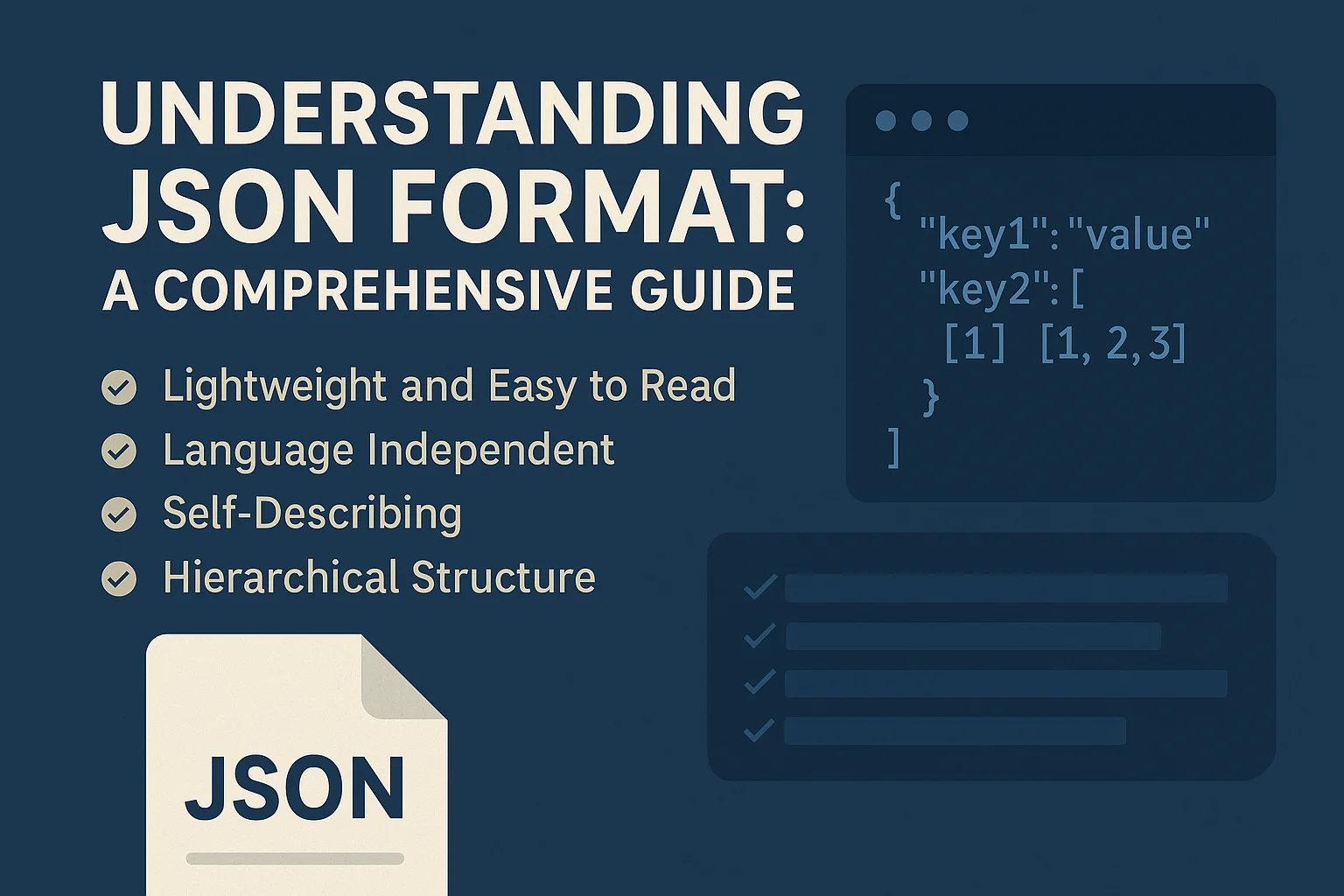
Understanding JSON Format: A Comprehensive Guide
Learn the fundamentals of JSON formatting, rules, and best practices for data structures.
Understanding JSON Format: A Comprehensive Guide
JSON (JavaScript Object Notation) is the universal data-interchange format of the modern web. Used across REST APIs, config files, mobile apps, and databases, JSON combines simplicity with language-agnostic structure.
This guide covers everything you need to know about JSON formatting, syntax rules, and best practices.
🧱 Understanding JSON Structure
JSON is built on two primary structures:
- Objects: Unordered collections of key-value pairs wrapped in curly braces
{}. - Arrays: Ordered lists of values wrapped in square brackets
[].
1. JSON Object Example
{
  "firstName": "Alex",
  "lastName": "Morgan",
  "isDeveloper": true,
  "age": 28
}
2. JSON Array Example
[
  { "id": 1, "name": "Development" },
  { "id": 2, "name": "Design" },
  { "id": 3, "name": "QA" }
]
🔍 Minified vs. Beautified JSON
APIs transfer JSON in minified format to save bandwidth, while developers require beautified JSON with clear indentation for debugging.
Minified (Compact):
{"id":101,"user":"alex","roles":["admin","editor"],"active":true}
Beautified (Formatted):
{
  "id": 101,
  "user": "alex",
  "roles": [
    "admin",
    "editor"
  ],
  "active": true
}
⚙️ Core Syntax Rules & Data Types
To ensure your JSON is valid, follow these strict syntax requirements:
- Double Quotes Only: Keys and string values MUST be enclosed in double quotes
"key"(never single quotes'key'). - No Trailing Commas: Do NOT place a comma after the final key-value pair or array item.
- Supported Data Types:
string:"Hello World"number:42or3.14159boolean:trueorfalse(lowercase)array:[1, 2, 3]object:{ "key": "value" }null:null
- Unsupported Types: Functions, dates, undefined, comments, and Regex are NOT valid JSON values.
✨ Best Practices for JSON Formatting
- Use Consistent Indentation: Standard practice is 2 spaces or 4 spaces per nesting level.
- Use camelCase Key Names: Stick to camelCase (
userId,createdAt) across all payloads. - ISO 8601 Date Standard: Represent dates as ISO formatted strings, e.g.
"2026-07-28T12:00:00Z". - Validate Before Sending: Always test JSON payloads with online formatters like json.toolaska.com.
🎯 Summary
Understanding JSON structure and formatting rules saves development time and prevents silent runtime errors. Keep your JSON clean, consistent, and validated!